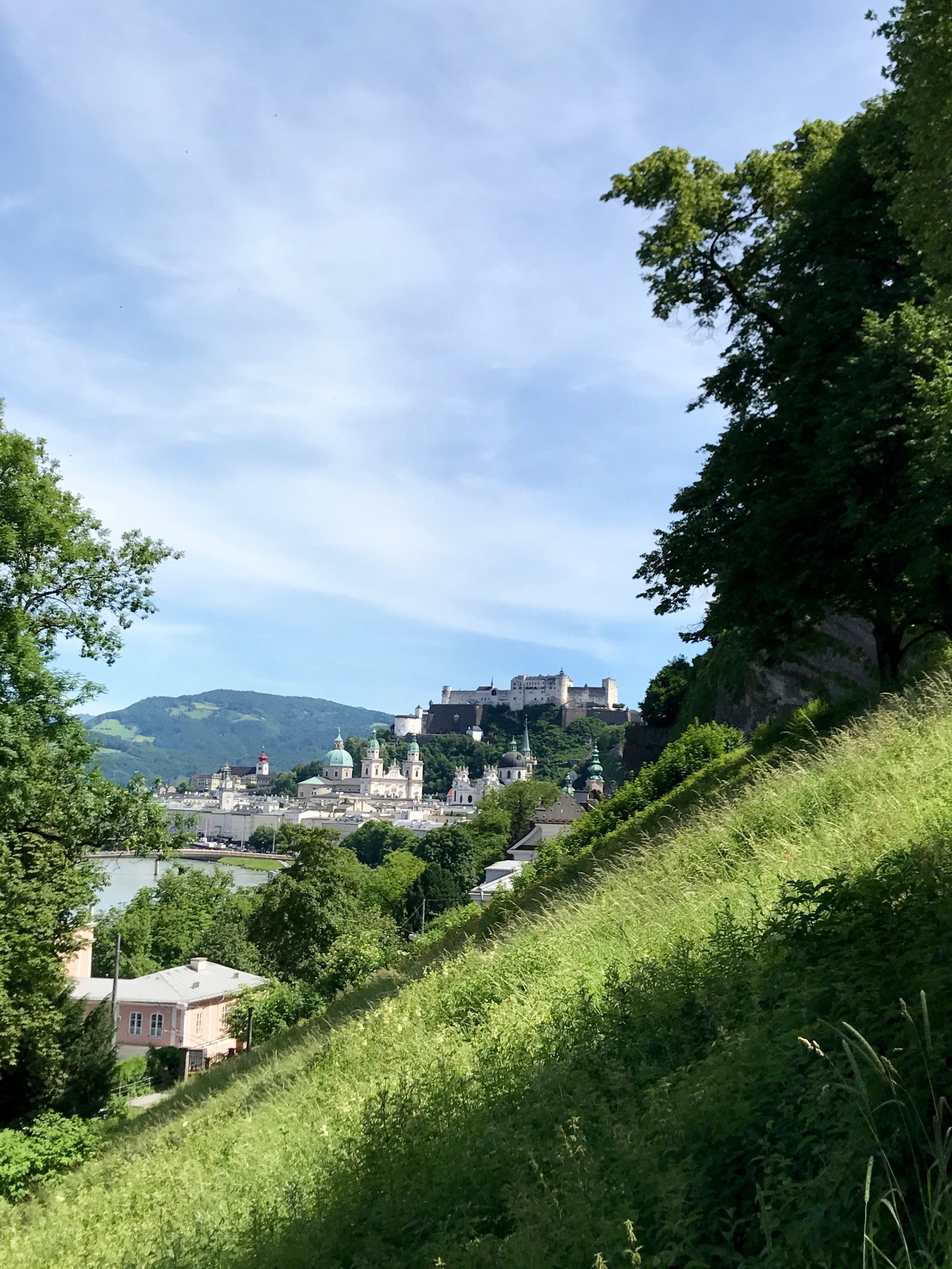
Dale Dreyfoos
Dear Dale,
We wanted to thank you for helping make our honeymoon the adventure of a lifetime. Because we wanted to share photos of your gifts, we decided against sending more traditional thank-you cards; instead, below is a picture gallery of what your contributions made possible!
<nerdy statement> A decade's worth of psychological research suggests that experiences make us happier than material possessions. </nerdy statement> Because we're fortunate enough to share a home with the appliances and furniture we need (IKEA furniture, but hey), we opted for a less traditional spin on wedding registries. It was our hope that a Honeyfund would offer a month's worth of incredible experiences—from dinners to sightseeing, from train tickets to hotel rooms—that we could directly attribute to the loved ones who made those experiences possible. We even carried a spreadsheet with us everywhere we went that indicated who had sponsored each activity, which helped guide us through each day.
Please enjoy the photos and captions below! If you'd like to see more pictures of our honeymoon travels, you can view the full gallery here.
Thank you again for your generosity and friendship, and for making this first chapter of our marriage possible.
Love from,
What you sponsored: A night in (and eating our way through) Salzburg
Thanks to you, we had a lovely hotel near Salzburg's Old City--and were also able to share some awesome meals through town! Thank you again for your Sacher Torte recommendation: that was such a beautiful afternoon on the water. Below are photos of what you made possible!
A night in Salzburg
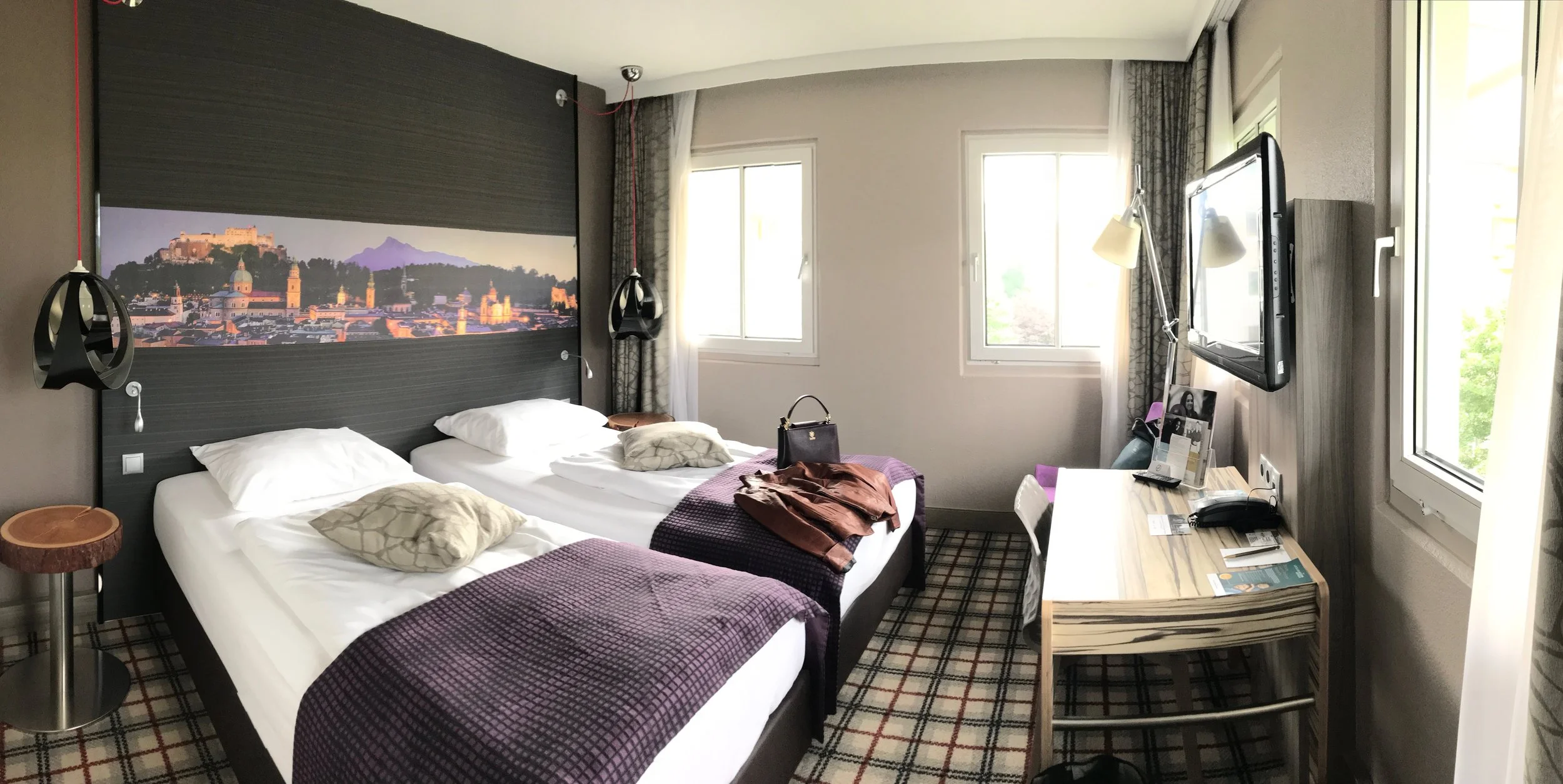
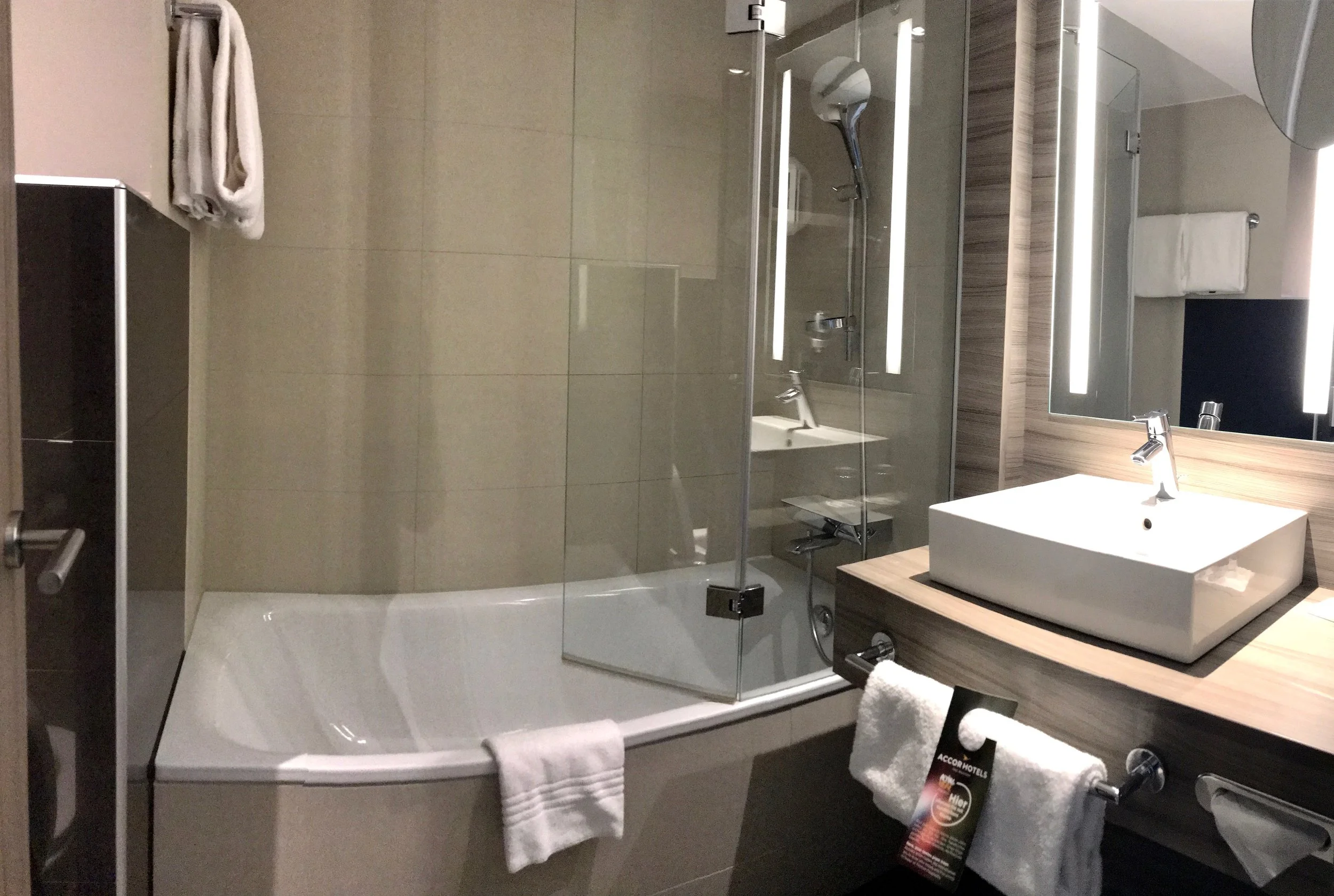
This was one of the first "actual" hotels of our honeymoon, so as unappreciative as it might sound toward our (lovely) bed and breakfasts in Italy and Switzerland, we were overjoyed to have A/C! We also had a little Nespresso that came with five or six espresso pods, which Ryan went through in a single day.
This was also our first bathtub (and all-around fancy bathroom) of our trip. I actually sought out a Lush store in Salzburg just to get a bath bomb.
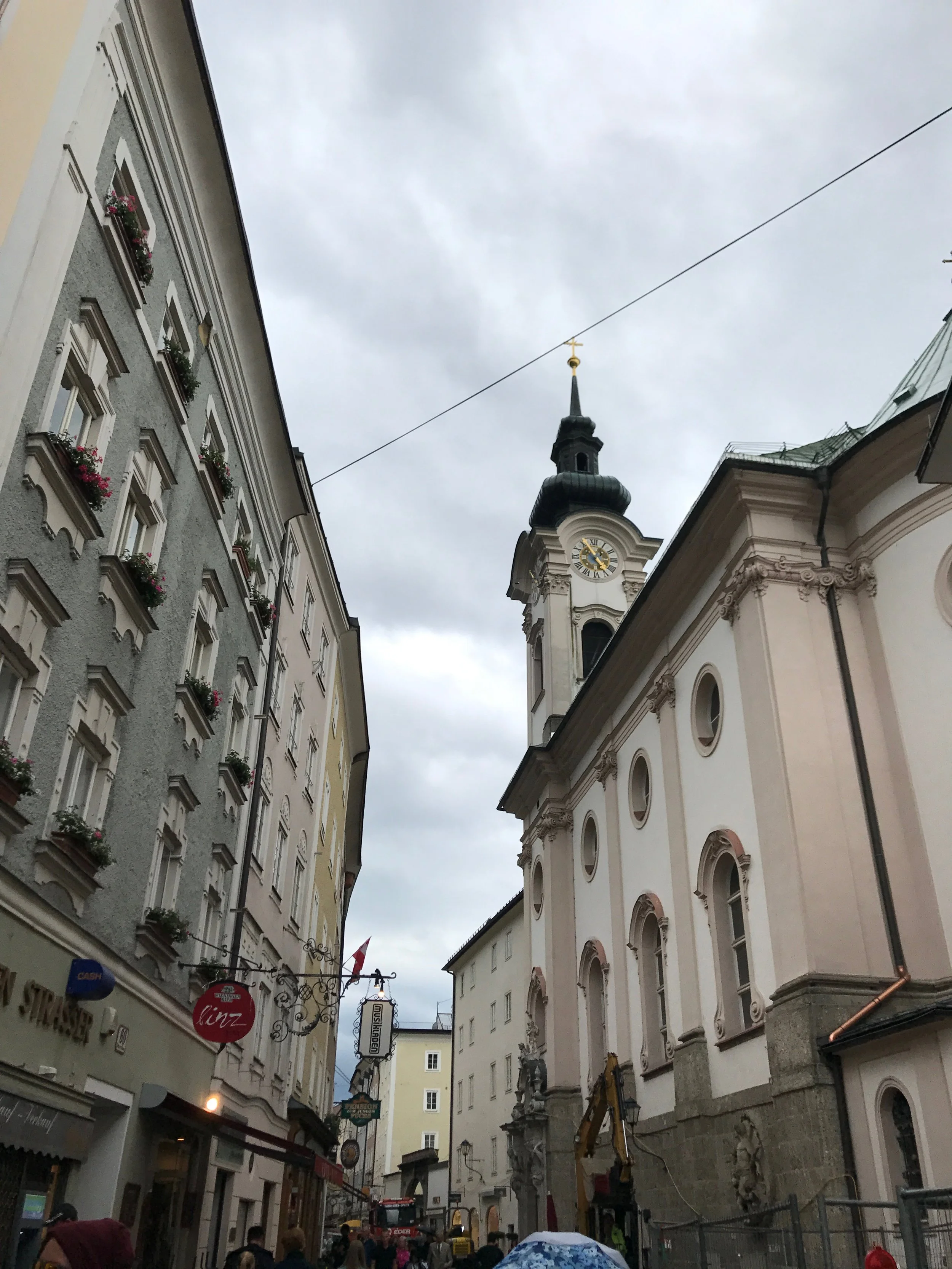
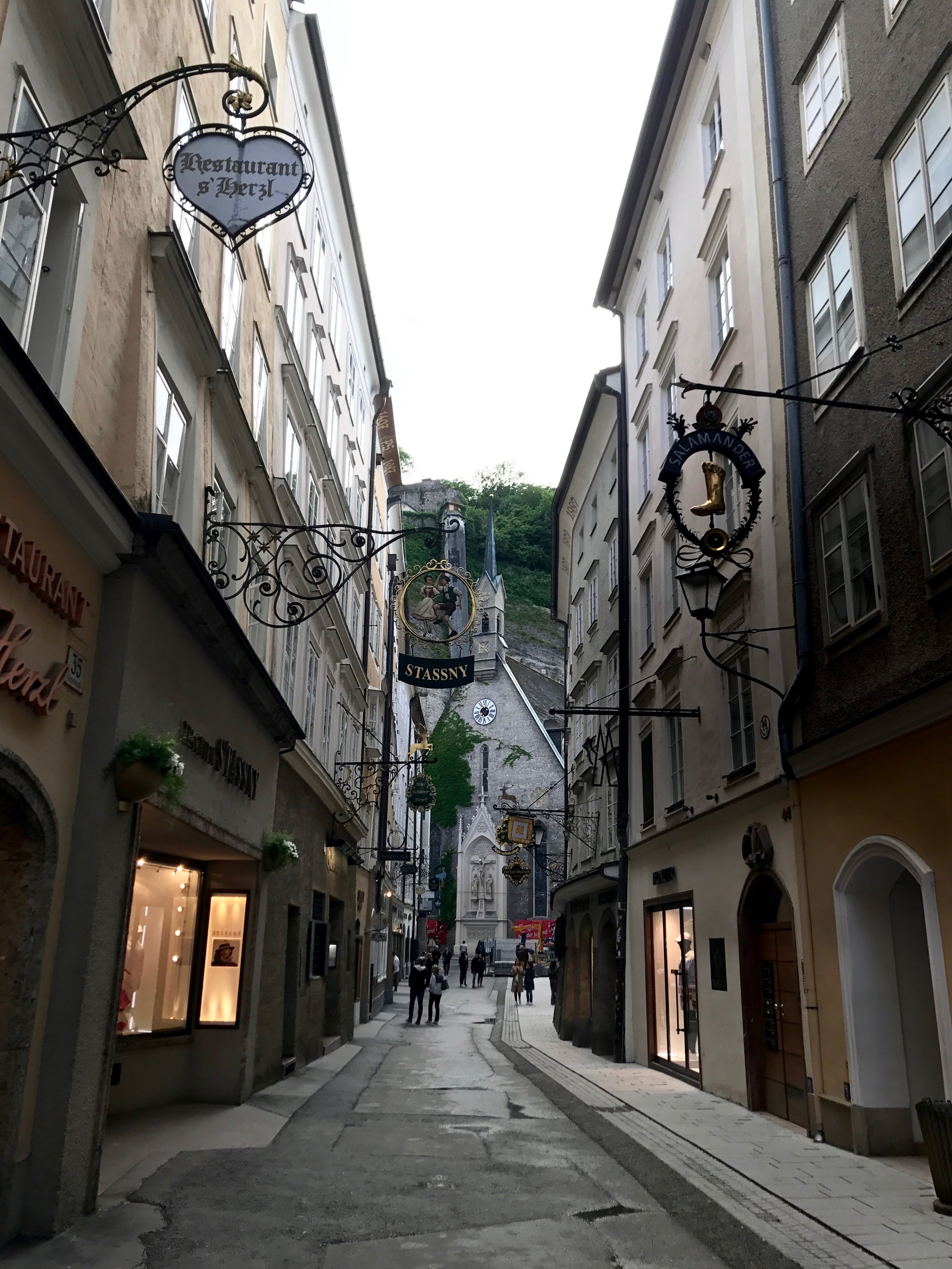
We window-shopped along the Getreidgasse (one of Salzburg's main shopping streets). What we found funniest about this particular shopping venture is that each shop is required to maintain Salzburg's old aesthetic by being marked with a small, ornate, wrought iron sign with a symbol indicative of its wares for sale. A designer shoe shop might have a small iron shoe hanging above its door, and a restaurant specializing in sausages might have a small pig. McDonald's had a modest set of twin arches, and Starbucks had a steaming cup of coffee. Mozart's childhood home was even located along this street, now a museum so touristy that we continued on without stopping.
Our favorite aspect of this shopping street—as well as the large shopping avenue that runs parallel to it—was the extensive network of medieval tunnels connecting the two streets through winding passages, which are now lined with shops, restaurants, and cafés. We enjoyed these tunnels more than the tributary avenues themselves.
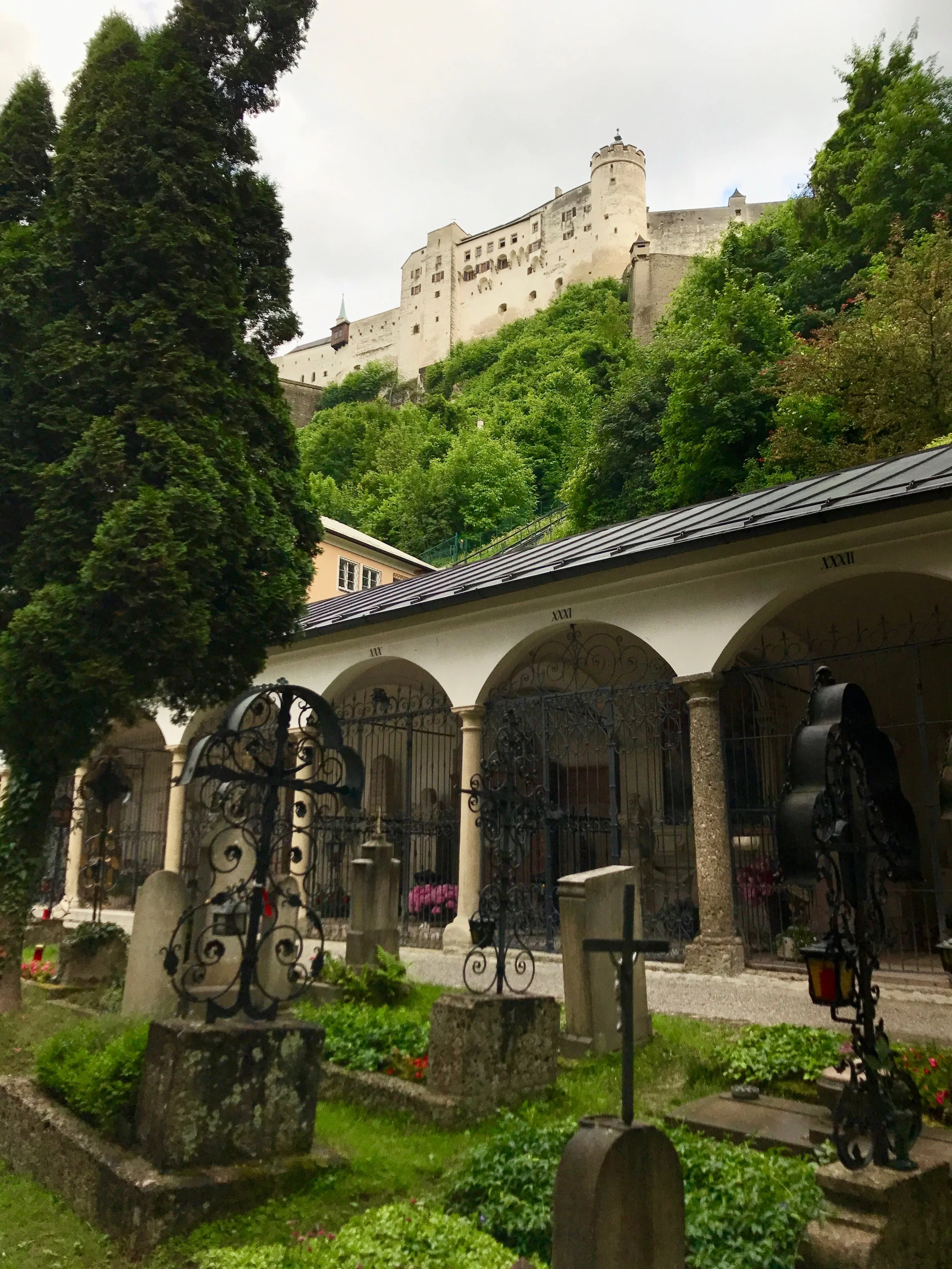
St. Peter's Cemetery, most famous for shielding the Von Trapps from Nazi eyes after the Captain performed at Toscanini Hof, the huge outdoor theatre just across the street. (Note: This scene was actually filmed on a Fox lot, regardless of what Salzburg tour guides might tell you.) The cemetery itself originates from 696, and houses a beautiful Romanesque church that still shows bits of faded frescoes from the 1200s. Just across the square adjacent to the outdoor theatre is the Stiftskeller St. Peter restaurant, the oldest restaurant in Europe and questionably the oldest still-running restaurant in the entire world (est. 803). Christopher Columbus and Mozart were both served at this restaurant. In the distance, you can see Salzburg fortress.
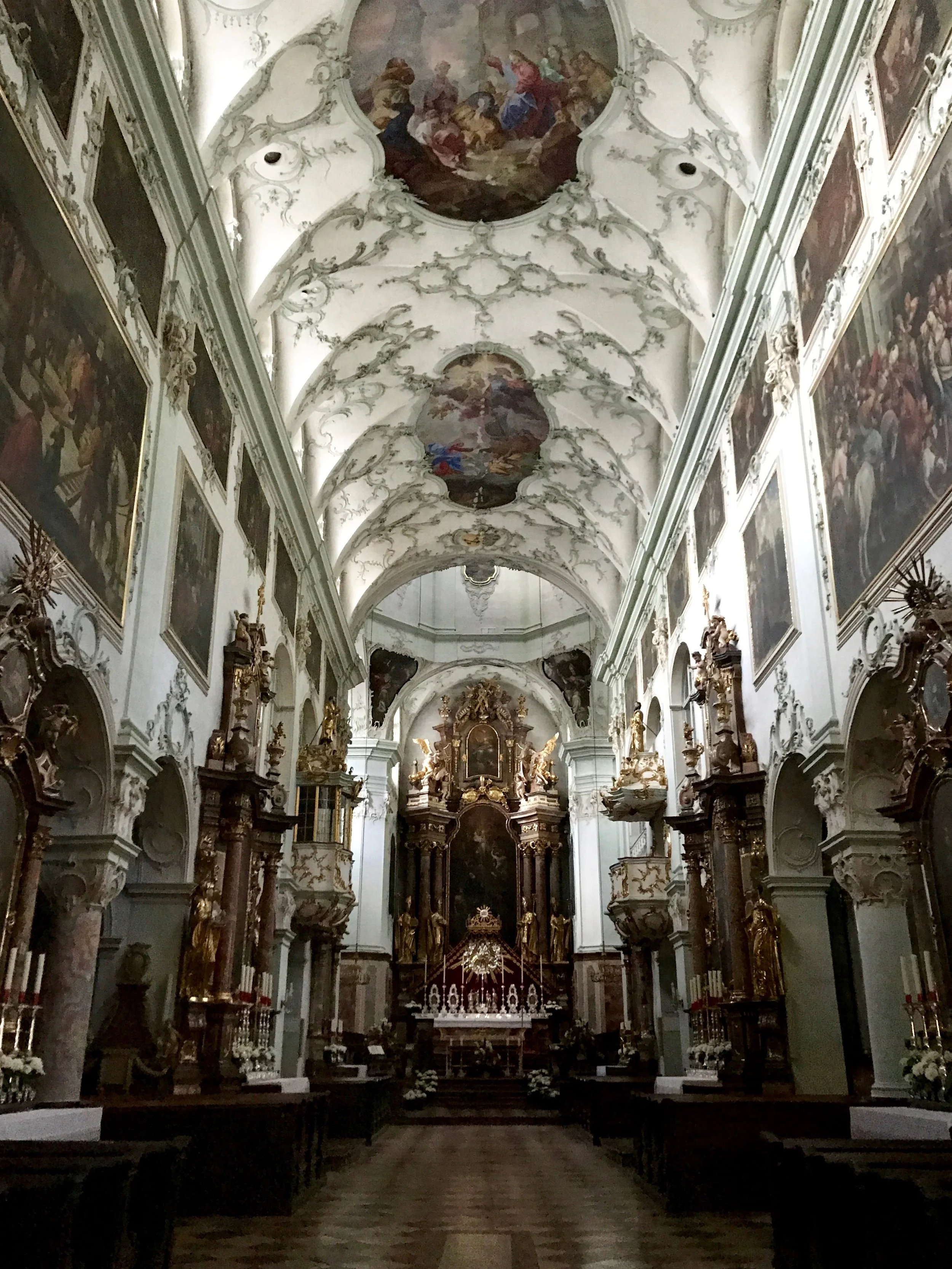
The Romanesque church near St. Peter's Cemetery. Michael Haydn is buried here.
Yet another narrow shopping street. It started to rain right after we took this photo, so we ducked for cover in Alchimiste Belge—a smoky Belgian bar with an owner so perplexed by Ryan's request for a beer list that he laughed and said, "My friend, I'm the beer list." We got a second drink from the nearby Saitensprung on Steingasse (as in, a beer stein)—a street that has made pub-hopping in Salzburg a little too easy. The pedestrian-only alley offers bar after bar, from tapas pubs to underground wine cellars to hip, modern cocktail destinations. Saitensprung was Rick Steves's most strongly recommended of the lot, with its ancient cellar walls and stalactites of candle wax in every arched corner. This aesthetic, mixed with electronic dance music and a coordinated light show along the ceiling, created a very different atmosphere from what we expected. We had just settled down with cocktails when the owner himself, who moved from Athens, Greece to Austria some 23 years ago, came over to introduce himself. When a group of his old college friends (and more specifically, from the Ohio area) stopped by half an hour later, he didn't hesitate to introduce us as "the honeymooners; the bearded one loves LeBron James."
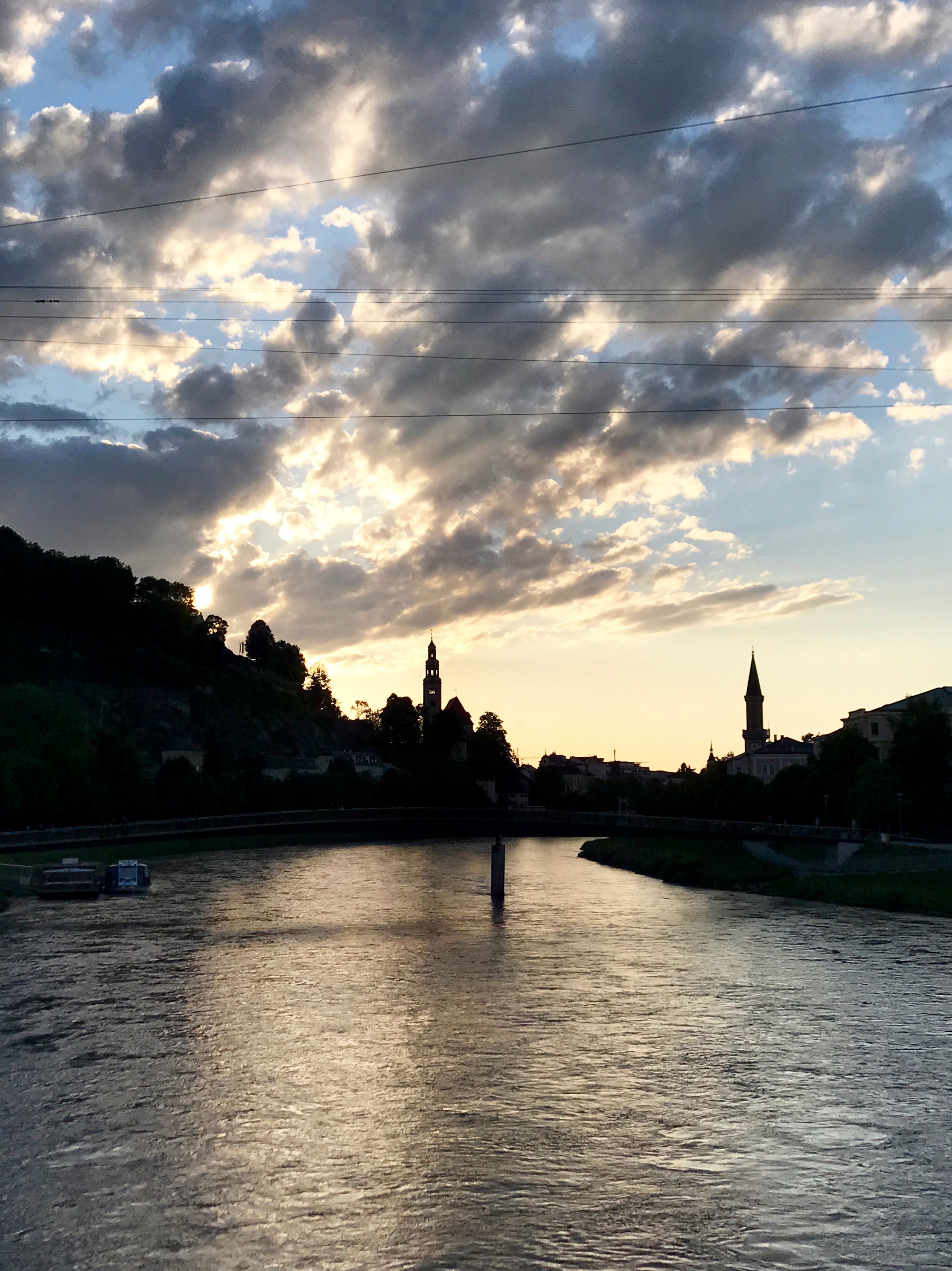
Crossing the Salzach (which later joins the Danube) on the Staatsbrücke bridge from the old city toward our hotel.
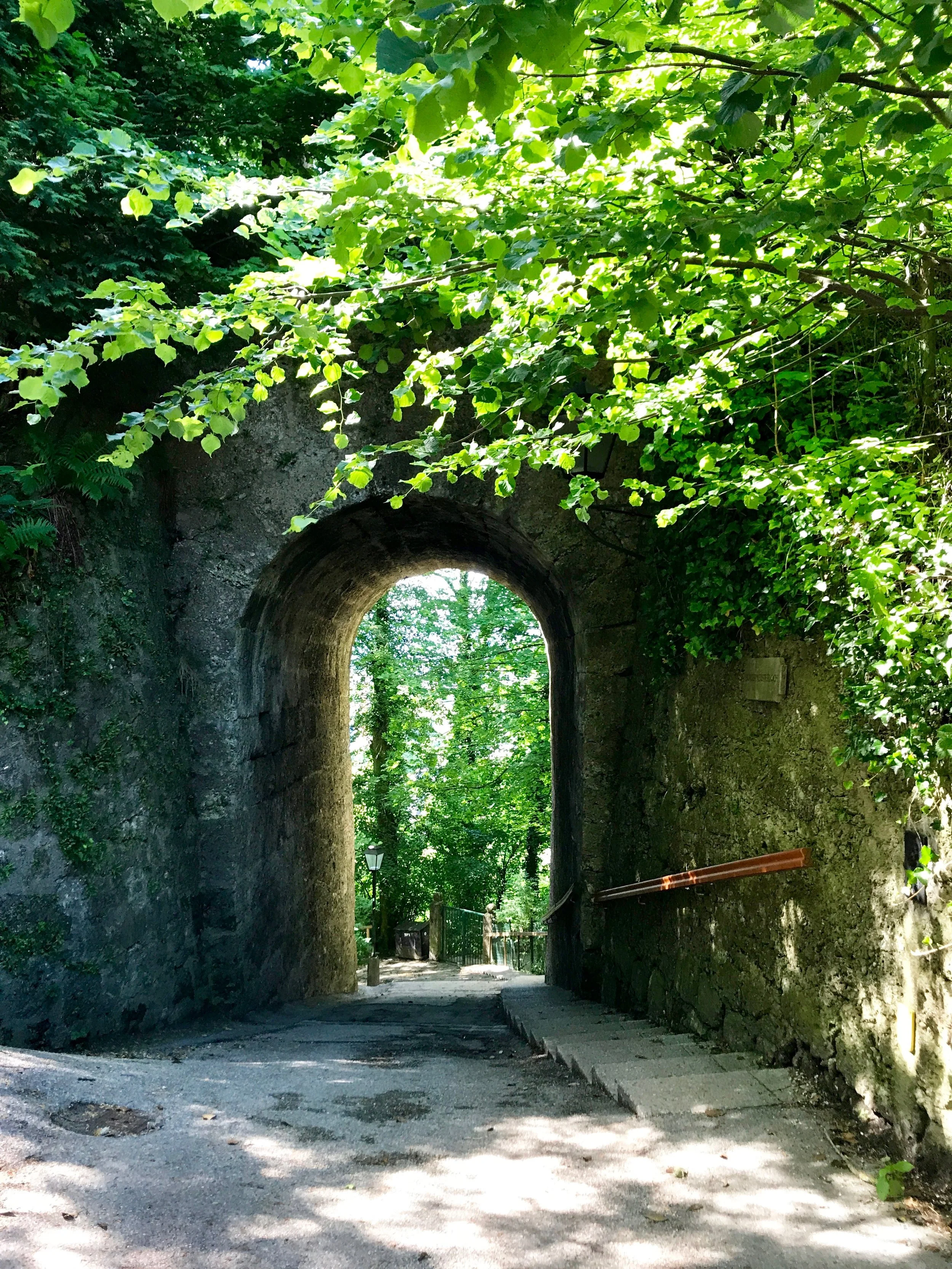
We took this during the long, sweaty hike up Salzburg's largest hill to the Festhung Hohensalzburg, a fortress so foreboding that it scared off any and all armies interested in conquering the city over the past millennium. And indeed, the city has never—in its history—experienced a siege or takeover; it was conquered only once, and not by force. (They willingly surrendered to Napoleon's army.) Just the sight of this intimidating network of ramparts, turrets, and towers atop this incredibly steep hill was enough to scare away interested parties, including the Ottoman army in the 1600s. They just went down the street and conquered Vienna, instead.
This fortress offered incredible views of the city and the surrounding alps, as well as eerie torture tools that were never even used, and an aerophone—a mechanical organ known as the Salzburg Bull.
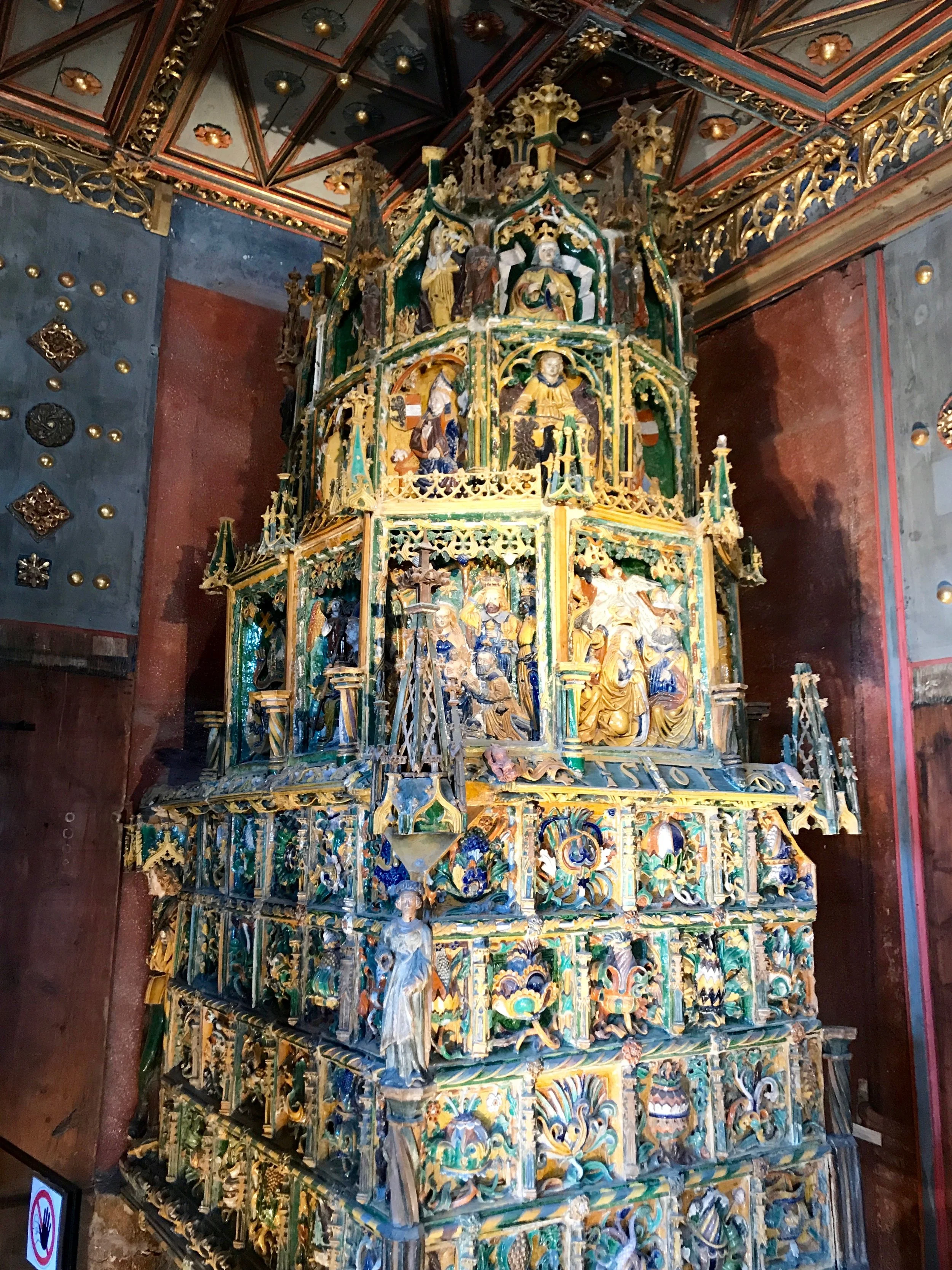
One of the ornately tiled ovens in Salzburg Fortress (Festung Hohensalzburg).
Our time in Salzburg ended with a trip up its second-highest hill, not far from the fortress just to the south. Tucked into one side was Augustinerbräu's Kloster Mülln, our first "real" beer garden. Imagine a sprawling, tree-covered terrace with hundreds—hundreds—of people, all united in their love of beer, pretzels, and conversation. Here's a breakdown of what happens when you get to Augustiner's biergarten: You tell the cashier whether you want half a liter or a full liter, she gives you a paper receipt with your order, you grab your respective stein off the wall and wash it yourself with a communal spigot in the middle of the line, then hand your receipt and your stein over to the bartender at the end of the hall, who fills it with just one beer—they only have one type, that's it—and basically throws the stein back at you without a care in the world whether you survive the assault of ceramic and foamy liquid.
Eating in Salzburg
Our first stop in Salzburg was dinner at Köchelverzeichnis (after almost two weeks in German-speaking countries I still have no idea how to pronounce this).
It was a small, intimate space lit only by candles, and we sat at window seats by an open window that looked like its glass had been set in the Middle Ages. The rain was falling, the alleyway beyond was small and winding with people on their way home from work, and we sipped Austrian wines (especially grüner veltliner) and ate one of the best antipasti platters of our lives while listening to Mozart's various köchelverzeichnis.
It was such a joy watching the restaurant owner, who was overjoyed to find out we were on our honeymoon, play these piano compositions on an air-piano while she cooked pasta dishes and prepared antipasti (antipasti pictured here).
This pasta dish was unbelievable.
Rick Steves's strongly recommended Saitensprung bar.
We loved the mixture of modern lighting (the ceiling lights were constantly moving) with ancient wine cellar.
Ryan was going through such a cold brew withdrawal that he begged for a Starbucks stop when we woke up.
The Starbucks we chose, which faced Mozart's childhood home, had Roman cellars and wells underneath it—some partially preserved, some turned into tunnels toward their bathrooms.
As silly as it sounds, we found so much comfort in these lemon poppyseed muffins and Starbucks coffees.
We had lunch at Zweltler's, a restaurant just off Universitätsplatz that served traditional Austrian food. Ryan was excited to get an actual stein of beer.
We split a series of traditional dishes that mostly included a lot of beef, soup variations, shredded pancakes, dumplings, and egg noodles.
Salzburger Nockerln, an Austrian dessert delicacy. It's basically a sweet, puffy soufflé.
We dove back into the Old City and ended up at Hotel Sacher, now renowned for its famous torte that stems back to 1832.
We sat by the river, sipped chocolate-sprinkled cappuccinos, and ate our just-bitter-enough dark chocolate tortes.
As delicious as this looks, trust me...it was even better.
We had a rainy time in Salzburg, but it was welcomed--the temperatures were lovely, and it was never hard to find a place nearby to wait out the drizzle. Here's a photo during one rainy spell, when we just ducked inside and shared a grüner veltliner.